

Greek Mythology-AI Greek mythology knowledge guide
AI-powered guide to Greek myths and legends
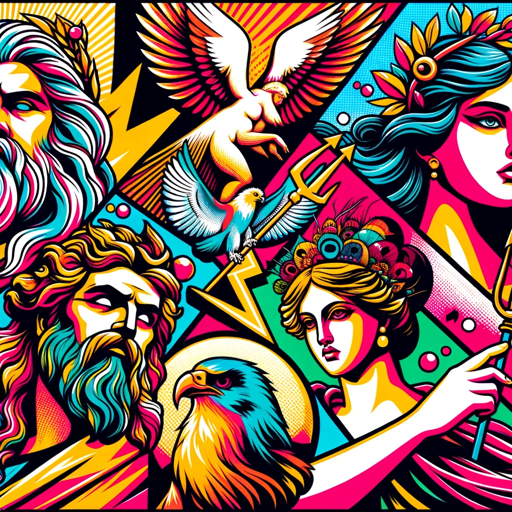
Greek mythology with vivid imagery
Tell me about Hercules.
What's the story of Pandora's Box?
Explain the myth of Persephone.
Who were the Titans?
Get Embed Code
Related Tools

Lyric Poet - Home of the Super Suno Prompts
Optimizes and generates lyrics for rhythm and thematic cohesion. Super Suno Prompts and album covers too.
Athena
A witty robot philosopher from 2521.

Vedic Astrology
Secure and private Vedic astrology insights.

Multiverse Christian
A modern, multiversal understanding of traditional Christianity. The answer to life, the universe and everything.

Fantasy Character Image Generator +
Create detailed images of fantasy characters inspired by role-playing game universes, providing customizable options for races, classes, clothing, weapons, and environments

古装头像
古装头像生成器
Introduction to Greek Mythology
Greek Mythology is a collection of storiesGreek Mythology Overview, myths, and legends that were passed down through generations in Ancient Greece, forming an essential part of Western cultural heritage. These myths describe the lives, struggles, and adventures of gods, goddesses, heroes, and mythical creatures, and they serve as a foundation for explaining the natural world, human behavior, and societal customs. Greek mythology is not just about fanciful tales; it encompasses a deeper understanding of human existence, addressing themes such as love, vengeance, justice, fate, and morality. In practical terms, Greek mythology provides archetypal figures and stories that have influenced literature, art, psychology, philosophy, and even modern popular culture. For example, the figure of Achilles, a hero of the Trojan War, is often cited as the embodiment of heroism and the tragic flaw of excessive pride. In modern times, such myths are often reinterpreted in literature, movies, and video games, showing their lasting relevance. The purpose of Greek Mythology in the broader sense is to give insight into the ancient Greeks' worldview. It served both to entertain and educate, offering allegorical lessons about the human condition. These myths are not just religious stories but also reflections of human experiences and the inner workings of society.
Main Functions of Greek Mythology
Cultural and Educational Value
Example
The myth of Persephone's abduction by Hades is a key allegory for the changing seasons, teaching ancient Greeks about the cyclesGreek Mythology Overview of nature and agricultural rhythms.
Scenario
In ancient Greece, a farmer might have used the myth of Persephone to explain why crops would die in the winter and grow again in the spring. The myth offered an emotional understanding of nature's cycles, linked to divine actions, fostering a deeper connection to the earth's cycles and the importance of rituals tied to agricultural practices.
Psychological and Philosophical Insights
Example
The story of Oedipus, who unknowingly fulfills a prophecy of killing his father and marrying his mother, explores themes of fate, self-determination, and moral responsibility.
Scenario
Modern psychologists, particularly those influenced by Sigmund Freud, have used the myth of Oedipus to explore concepts of unconscious desires, family dynamics, and identity. In contemporary therapy, the term 'Oedipus Complex' has become shorthand for describing a child's feelings of competition with their parent of the same sex and attraction to the opposite-sex parent.
Literary and Artistic Inspiration
Example
The epic tales of Odysseus’ adventures in 'The Odyssey' have inspired countless works of art, literature, and theater, from Homer’s time to modern adaptations like James Joyce’s 'Ulysses'.
Scenario
An artist or writer can draw from Greek myths to create new works that reimagine classical stories. For example, the story of Icarus, who flies too close to the sun, has been depicted in paintings, poems, and even modern movies, symbolizing the theme of hubris (excessive pride) and its consequences. This continues to serve as a moral lesson for audiences today.
Ideal Users of Greek Mythology
Students and Educators
Students studying ancient history, literature, philosophy, or anthropology benefit from exploring Greek mythology as it provides a foundational context for understanding Western thought, storytelling, and cultural development. Educators use these myths to teach critical thinking, cultural literacy, and moral lessons, often connecting ancient texts with modern issues.
Writers and Artists
Creative professionals, including novelists, screenwriters, poets, and visual artists, are ideal users of Greek mythology. The themes, characters, and symbolism within the myths offer a rich reservoir for modern storytelling, whether they are retelling ancient stories or using mythology as an inspiration for new works. The universal themes of love, betrayal, heroism, and tragedy resonate in contemporary narratives.
Psychologists and Therapists
Psychologists and therapists, particularly those working with Jungian or Freudian frameworks, often draw on Greek mythology to understand archetypes, human behavior, and the unconscious mind. The stories of gods, heroes, and mythical creatures provide metaphors and symbols for exploring issues like identity, conflict, and personal growth.
Philosophers and Cultural Analysts
Greek mythology also serves as a tool for philosophers and cultural analysts who examine the human experience through the lens of myth. These professionals often explore the moral and existential questions raised by Greek myths, such as fate versus free will, the nature of justice, and the consequences of hubris, to gain insight into both ancient and modern worldviews.
How to Use Greek Mythology
Open the Greek Mythology GPT in ChatGPT
Access the specialized Greek Mythology GPT through the ChatGPT interface. No special technical setup is required beyond a device with internet access and a ChatGPT account. This tool is designed specifically to answer questions using two authoritative sources: Edith Hamilton’s 'Mythology: Timeless Tales of Gods and Heroes' and Robert Graves’ 'The Greek Myths'.
Ask a Clear Mythology Question
Submit a specific question about Greek mythology, such as a character, myth, genealogy, symbolism, or cultural meaning. The more precise the question (e.g., asking about the role of a specific hero or deity), the more detailed and accurate the response will be.
Explore Source-Based Explanations
The GPT provides explanations grounded primarily in the two reference books. It can summarize myths, explain relationships among gods and heroes, clarify mythological symbolism, and discuss variations in stories described in those texts.
Use Follow-Up Questions for Deeper Insight
Ask follow-up questions to expand the discussion. You can explore genealogy of gods, compare versions of myths, examine cultural interpretations, or request structured summaries useful forGreek Mythology Usage Guide studying or research.
Apply the Information to Your Goal
Use the responses for learning, research, storytelling inspiration, educational content, or mythological analysis. For the best experience, ask focused questions, reference specific figures or myths, and request comparisons or explanations of themes.
Try other advanced and practical GPTs
Revue de la littérature
AI-powered tool for efficient literature reviews.

Animals GPT
AI-powered guide to the animal kingdom.
Hyperficient — Science-Backed Gym Coach
AI-Powered Science-Based Muscle Builder

Devis et Factures Rapides
Effortless invoicing and estimates powered by AI.

How Old Do I Look?
Discover your age with AI-powered precision.

FPV Drone Tech Advisor
AI-Powered Guidance for Smarter FPV Drone Builds

Book Quotes Finder
Discover inspiring book quotes instantly with AI

Copyrighter Assistant
AI-powered content rewriting made easy.

E-commerce Strategist
AI-driven strategies for e-commerce growth

Book Summary Expert
Unlock the wisdom of any book with AI-powered summaries

Quant AI
AI-Powered Insights for Smarter Decisions

Arbnb Listing Enhancer
AI-powered listing optimization for success
- Academic Study
- Literature Analysis
- Mythology Learning
- Story Research
- Cultural Education
Common Questions About Greek Mythology GPT
What sources does the Greek Mythology GPT rely on?
The GPT primarily draws information from two authoritative works: Edith Hamilton’s 'Mythology: Timeless Tales of Gods and Heroes' and Robert Graves’ 'The Greek Myths'. These texts provide detailed narratives, genealogies, and interpretations of Greek myths, allowing the GPT to deliver historically grounded explanations and summaries.
What kinds of questions can I ask this GPT?
You can ask about Greek gods, heroes, mythological families, narrative summaries, symbolic meanings, or relationships between characters. The GPT can also explain how different myths connect, outline mythological lineages, and clarify variations found in the source texts.
How is this GPT different from a general AI assistant?
Unlike general assistants that rely on broad knowledge sources, this GPT is specialized and focuses primarily on two well-known mythology books. This makes the responses more consistent with classical interpretations presented in those texts rather than drawing from many mixed modern sources.
Can this GPT help with studying or academic work?
Yes. It can summarize myths, explain character relationships, clarify themes in mythological narratives, and help organize mythological information for essays or study materials. Because the explanations are grounded in recognized mythology texts, they are particularly useful for educational contexts.
Can the GPT explain relationships between mythological characters?
Yes. One of its strengths is describing mythological genealogies and connections among gods, heroes, and creatures. For example, it can explain family trees, alliances among deities, and how particular heroes interact with different gods within mythological narratives.